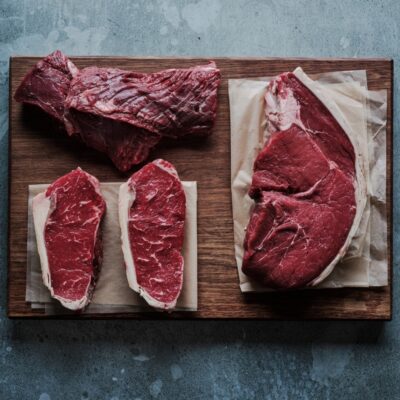
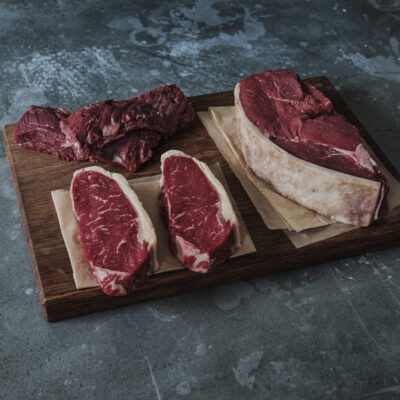
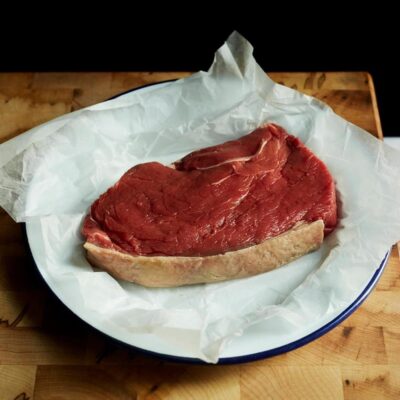
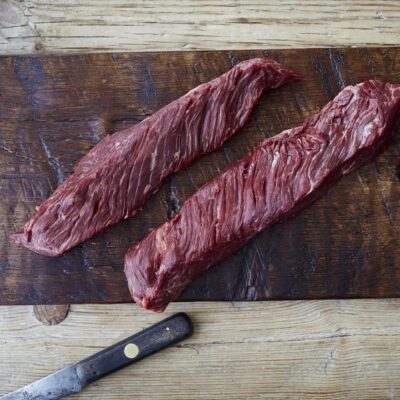
Ribeye is, by some way, our best-selling steak cut, and it’s not hard to see why. Its melt-in-the-mouth marbling and nugget of creamy fat mean that it is incredibly easy to cook at home, and the fat carries the flavour of the meat very well indeed. But, when we’ve hosted steak tastings in our shops, ribeye doesn’t always come out as the favourite, so here is a bit of encouragement to sizzle something different now and then.
Onglet / hanger steak – for keen cooks and Francophiles
If you want to enjoy something HUGELY flavoursome and deliciously rare to enjoy with a pile of frites and a bucket of peppercorn sauce, onglet is an absolutely superb choice. It is what foodie types will call a ‘textured’ cut, meaning that it isn’t automatically as tender as a ribeye, but seared hot and fast and sliced across the grain, it is a primal, gastronomic experience that really wows people – and is easier on the wallet than most steaks.
What is onglet steak?
A cut that sits just by the diaphragm, onglet or hanger steak has a long shape with a coarse-grained texture – if the neat appearance of fillet steak is what is called ‘fine grained’, onglet is considered ‘coarse grained’ with obvious fibres of meat. Its flavour is deliciously bold and gutsy, described by some as iron-rich or very faintly ‘offally’, but not so much that you need to like liver to enjoy its incredibly beefy taste. If you like your steak medium-well, this is not the cut for you…it is to be enjoyed rare or medium-rare.
What to serve with onglet
A classic steak frites with peppercorn or entrecote sauce, with a vibrant charred salsa with lots of chilli and garlic or with a super fresh Thai salad and lots of spicy nam jim sauce. It can handle spice, heat and acid brilliantly.
How to cook onglet steak
The secret to a perfectly rare or medium-rare onglet (aka without the grey, overcooked ring around the centre) is to cook onglet straight from the fridge – this enables you to get a beautiful crust while keeping the centre nice and pink.
Get your pan smoking hot and add some beef dripping/tallow or high smoke-point oil. Season the steak with kosher salt just before it hits the pan, and sear for 4-8 minutes, turning the steak to develop an even crust on all sides. Add a generous knob of butter after the first couple of minutes and baste as the steak cuts.
Onglet can range in thickness and its shape makes it difficult to use a temperature probe, so the best way to check on the cooking is to briefly remove it from the pan and feel the texture or even slice it in half to check the centre (you’re going to slice it to serve anyway). The centre should be nicely pink and the fibres of meat and soft put easily apart – keep checking if you’re not sure, as you can just keep putting it back in the pan if it’s not quite done.
Let it rest on a warm plate for 10 minutes then slice across the grain to serve. If the steak has cooled too much during resting, you can quickly flash it in a hot pan again before slicing – 20 seconds on all sides should do it.
Flat Iron / Butler’s Steak – the savvy steakhouse cut
A superb all-rounder that is as delicious thinly sliced into a steak sandwich or burrito as it is drenched in homemade stilton hollandaise. A great mid-week option for speedy meals.
What is a flat iron steak?
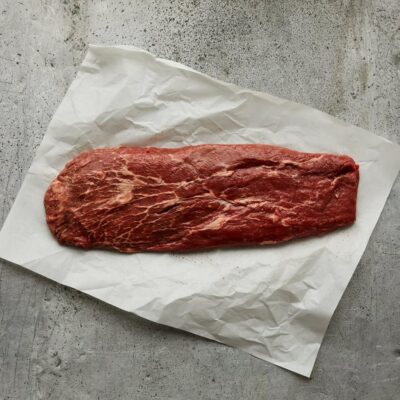
A superb yet lesser-known cut, flat iron is a neat muscle from behind the shoulder blade that typically has some lovely, fine marbling not dissimilar to sirloin. Being from the shoulder it has a great, beefy flavour, and it is free from sinew or gristle making it a great cut for stir fries as well as steak dinners.
What to serve with flat iron
Honestly, almost anything where you’d enjoy the steak medium-rare – it is a real crowd pleaser. It can be marinaded and flash fried for fajitas or a rice bowl (it’s delicious with a sticky, sweet soy sauce marinade), or simply cooked as you would a medium-rare steak and enjoyed with your favourite steakhouse sides – it is great with a rich, buttery sauce.
How to cook flat iron steak
Flat iron tends to be a fairly neat, not-too-thick steak that will cook quite quickly. Remove it from the fridge 15 minutes before you’d like to cook it. Get your frying pan smoking hot and add a little high smoke point oil or beef dripping/tallow. Season the flat iron steak with kosher salt just before it goes into the pan, and cook for two minutes either side – don’t move it around in the pan except for turning it over. Remove from the pan and let it rest for a couple of minutes while your pan heats up again, then sear for a final 1-2 minutes on each side depending on whether you like it more rare or medium-rare. Rest the steak for 5-10 minutes on a warm plate before slicing across the grain to serve.
Rump Steak – the steak for beef lovers
While not exactly uncommon, rump is certainly underrated. We dry-age our rumps to at least 40 days, which further concentrates this particularly flavoursome cut of beef and gives its lean muscles the chance to become nicely tender. It will never be quite as soft as a rib-eye or sirloin, but rump is still a stunning steak with a bold flavour just like roast beef.
What is a rump steak?
The rump is from the hind of the cow and is made up of three lean muscles. These muscles work more than prime steak cuts from the ribs, which rump has such a fantastic flavour. It is best bought thick-cut so that you can sear a good crust and leave the centre nicely rare or medium-rare. It can be bought as individual steaks, but really comes into its own as an impressive, dictionary-thick 1kg sharing cut, which is fantastic on the barbecue.
What to serve with rump steak
Sear it, slice it and drench it in a creamy, mustard-y mushroom sauce, or bathe in a vibrant lemon, garlic and herb marinade before cooking to medium-rare. Because rump steak is quite lean, it happily handles rich, creamy recipes – enjoy it with a side of roast bone marrow for a fantastically beefy feast.
How to cook rump steak
Firstly, you should buy it thick (2.5-3cm) – this will allow you to build up a particularly great crust and leave the centre nicely pink. Let it come up to room temperature for 30 minutes before cooking. Dice 30-40g of cold butter, peel and halve three garlic cloves and have a few sprigs of thyme or rosemary at the ready.
Heat a large, heavy pan over a high heat and add a little high smoke point oil or beef dripping/tallow. Pat the steak with kitchen paper and season generously with kosher salt and place into the pan to sear. After two minutes, turn it over and sear the other side. Remove from the pan, allow the pan to come up to temperature again and add the steak back into the pan, along with the diced butter, garlic and hard herbs. Cook the steak for another 2-3 minutes per side, and as the butter foams, spoon it over the steak. If you have a meat thermometer, cook to 50°C for medium-rare, 55°C for medium.
Let the steak rest for 10 minutes before slicing and serving.
Bavette / Skirt Steak – for confident and adventurous cooks
A curious yet fantastic steak cut that is savoury, nutty and almost a little sweet. While it does need careful cooking in the kitchen, it is not difficult to cook – you just need to know when to stop as it is best enjoyed quite rare. A textured cut rather than a super tender one, but a big hitter in the flavour department and perfect for marinating.
What is bavette steak?
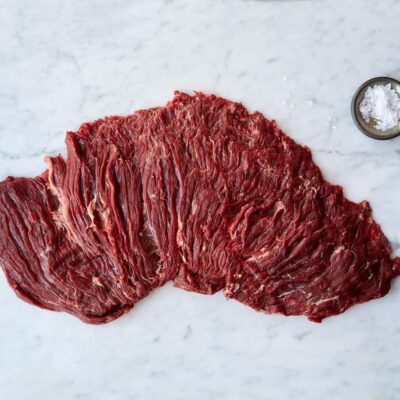
It’s a large, flat steak cut with prominent, long grains of meat. It is from the lower belly of the cow and has a wonderfully beefy, nutty flavour.
What to serve with bavette
Its open texture means that it will absorb marinades and flavours well – it’s a favourite for flash frying in Chinese cookery, especially when it has been velvetted (a traditional tenderising technique). Bavette or flank steak needs cooking hot and fast, and then slicing across the long meat fibres to ensure a more tender bite – thinly sliced into ribbons, it is absolutely unbeatable in a steak sandwich.
How to cook bavette steak
Mix a marinade of 3 tbsp olive oil, 2 tbsp soy sauce, 2 tbsp lemon juice, 1 tbsp worcestershire sauce, 1 tbsp tabasco sauce and 2 cloves minced garlic. Marinade the bavette for 3-6 hours in a container in the fridge.
Remove the steak from the fridge 30 minutes before you want to cook – take it out of the marinade and place it onto a plate.
To cook, get a pan or barbecue very hot. Cook the bavette for 2-3 minutes either side, then remove from the heat, cover with foil and let it rest for 10-15 minutes. You can use this time to reduce the remaining marinade to a sauce if you wish – it may need some honey for sweetness, extra chilli for heat or a knob of butter to emulsify (have a play around and work out what you like).
To serve, slice the bavette very finely across the grain of the meat and drizzle with your sauce.
 Steak Tasting Box